




Few festivals change shape as beautifully from one state to the next as Navratri. The name means “nine nights”, and for those nine nights in the month of Ashvin — usually late September or October — India celebrates the goddess Durga and the victory of good over evil. In Gujarat it is a dance, in Bengal a homecoming, in Telangana a festival of flowers, in Mysuru a royal procession. The tenth day, Dussehra or Vijayadashami, closes it all with a celebration of victory.
Why Navratri is celebrated
The festival honours Durga, who fought the buffalo demon Mahishasura for nine days and defeated him on the tenth. Each night is dedicated to one of her nine forms, the Navadurga: Shailaputri, Brahmacharini, Chandraghanta, Kushmanda, Skandamata, Katyayani, Kalaratri, Mahagauri and Siddhidatri. In much of North India, the tenth day also marks Lord Rama’s victory over Ravana, which is why Ramlila performances run through the nights and giant effigies of Ravana are burnt on Dussehra.
Many families fast or eat simple sattvic food through the nine days, and on the eighth or ninth day young girls are worshipped as forms of the goddess in Kanya Puja.
One festival, many Indias
Gujarat: garba and dandiya
Gujarat dances. Every evening, circles of people move around a lit garbo — an earthen lamp that stands for the goddess — in garba, and later pair up with painted sticks for dandiya raas. Neighbourhood squares, housing societies and huge grounds fill up until well past midnight.
Bengal, Odisha, Assam and Tripura: Durga Puja
In the east, the last five days become Durga Puja. Durga is welcomed home with her children Lakshmi, Saraswati, Ganesha and Kartikeya in thousands of pandals, each an artwork of its own. The air smells of dhunuchi smoke, there is pandal-hopping late into the night, and on Dashami married women play sindoor khela before the idol is immersed.
Telangana: Bathukamma
In Telangana, women build Bathukamma — towering cones of seasonal flowers like marigold, celosia and tangedu — and sing and dance around them before setting them afloat on a lake or tank on the final day.
Karnataka: Mysuru Dasara
Mysuru celebrates Dasara as it has for centuries, with the palace lit by nearly a hundred thousand bulbs and the grand Jamboo Savari procession on Vijayadashami, when the goddess Chamundeshwari is carried through the city in a golden howdah on an elephant.
Tamil Nadu and Andhra Pradesh: Golu
Homes set up Golu (Bommai Kolu) — tiered steps of dolls showing gods, saints and village life — and invite friends over each evening for songs and sundal.
North India: Ramlila and Dussehra
From Delhi to Varanasi, Ramlila retells the Ramayana night after night, building up to the burning of Ravana, Kumbhakarna and Meghnad on Dussehra. In Himachal, Kullu’s Dussehra begins on Vijayadashami itself and runs for a week.
The nine colours of Navratri
In Maharashtra and Gujarat especially, each day of Navratri has a colour, and offices and friend groups dress to match. The colours follow the weekday on which Navratri begins, so the order changes each year — look up the list when the festival starts, then plan nine easy looks around it.
What to wear for Navratri
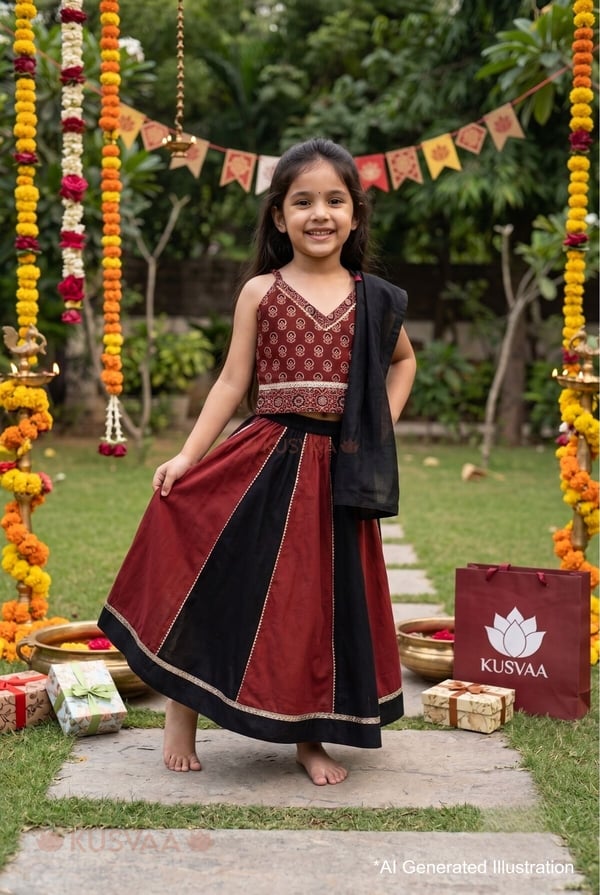
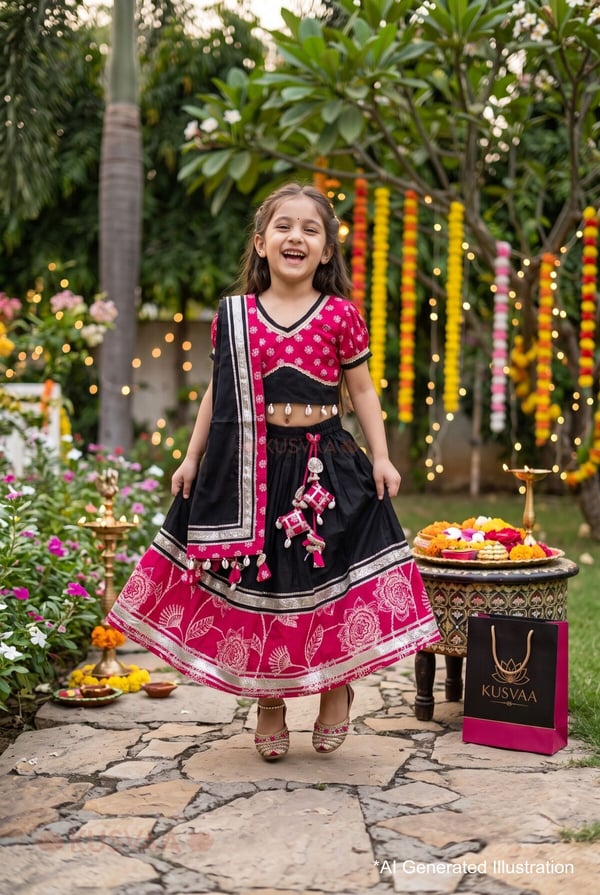
- For garba and dandiya: you will dance for hours, so choose light cotton or mulmul that breathes, an easy flare that moves with you, and a dupatta you can tie at the waist. Mirror work, bandhani and bright block prints catch the light beautifully.
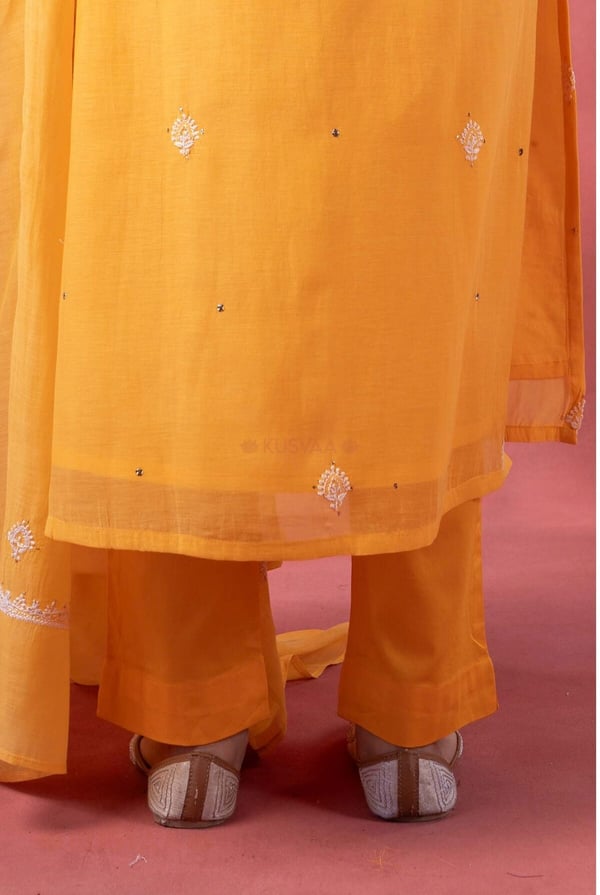
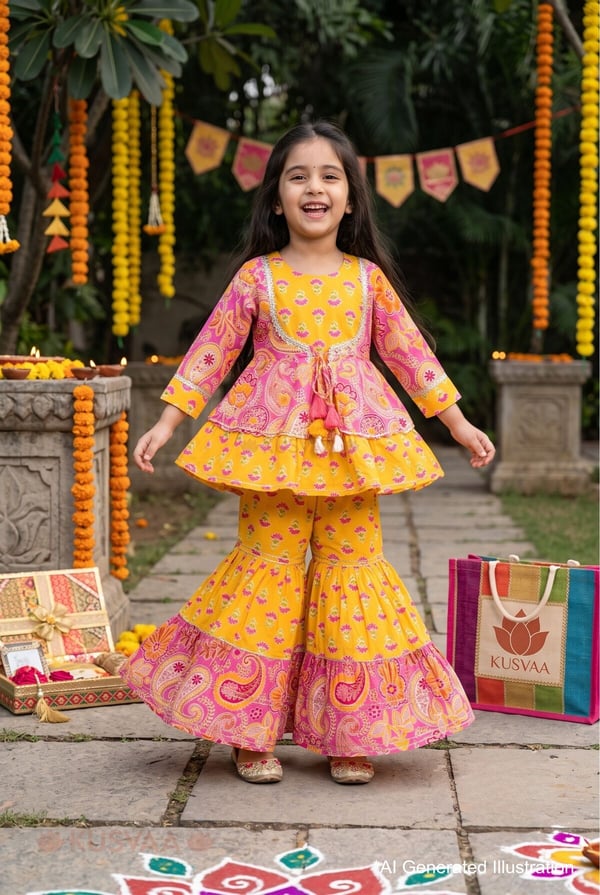
- For Durga Puja: pandal-hopping means long evenings on your feet. Kurta sets in cotton or chanderi in red, white, mustard and deep green feel right; on Dashami, red and white is the classic choice.
- For the nine colours: keep a few neutral pieces — a white palazzo, an ivory dupatta — and change the kurta each day to follow the colour.
- For Dussehra and family puja: a set with a little zari or gota patti dresses up without being heavy.
Browse our Navratri edit and the wider festive season collection, or try pieces on at a Kusvaa store near you.
When is Navratri?
Sharad Navratri begins on the first day of the bright half of Ashvin and usually falls between late September and October; Dussehra follows on the tenth day. There is also a spring Navratri, Chaitra Navratri, in March or April, which ends on Ram Navami.
Shubh Navratri from all of us at Kusvaa.


