



The seventh night belongs to Maa Kalaratri — the fiercest form of Durga. Dark as the night of destruction, with dishevelled hair and a necklace that flashes like lightning, she destroyed the demons Shumbha, Nishumbha and Raktabeej. Yet she is also called Shubhankari — “the one who does good” — because she destroys only what harms her devotees.
How she is shown
She rides a donkey and has four arms: one holds a sword, one a hook or thunderbolt, and two are raised in blessing and protection. Her three eyes shine, and flames are said to come from her breath.
What the seventh night means
Kalaratri stands for the end of fear, ignorance and darkness. In Bengal, this is Saptami, the first of the great days of Durga Puja, when the goddess is welcomed with the bathing of the Kola Bou, a banana plant dressed as a bride.
Offering and prayers
Jaggery is traditionally offered to her. Her mantra is “Om Devi Kalaratryai Namah”.
What to wear on the seventh night
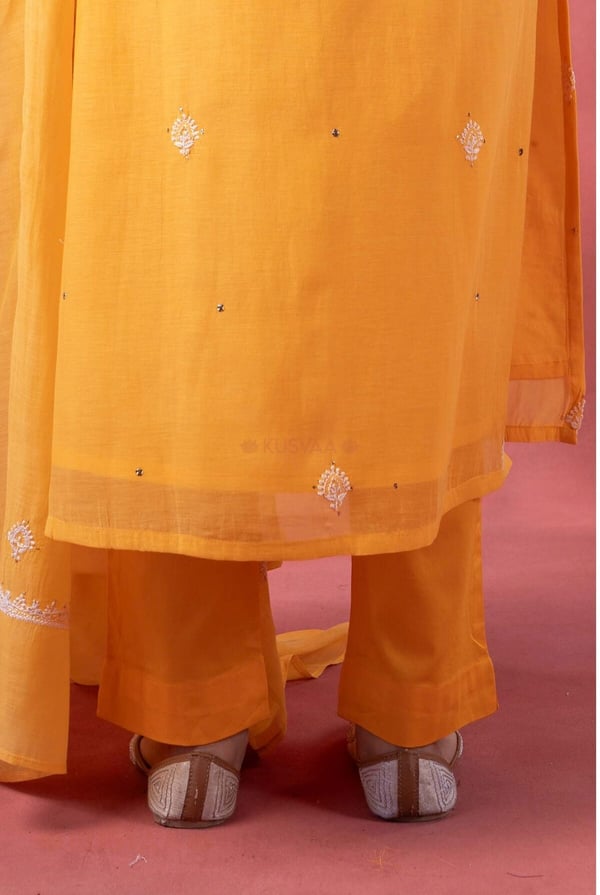
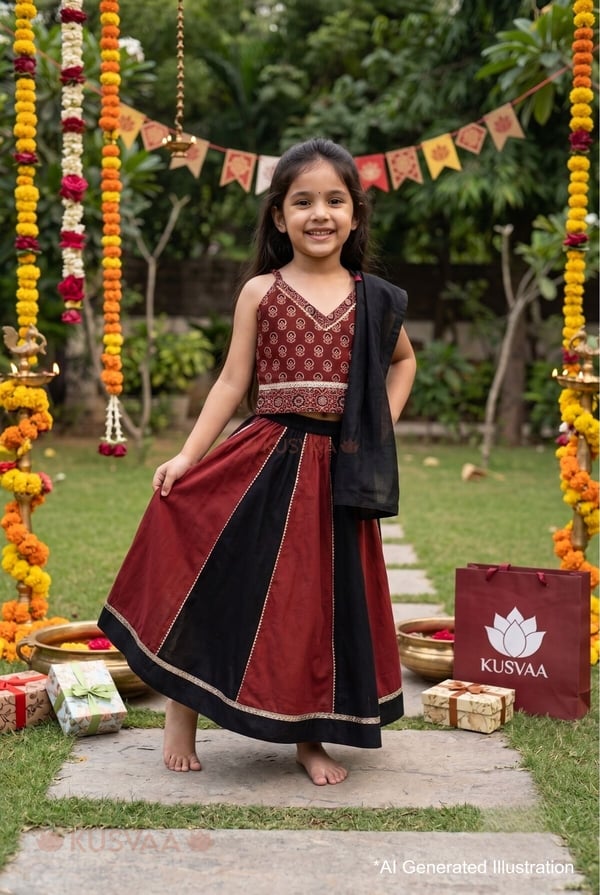
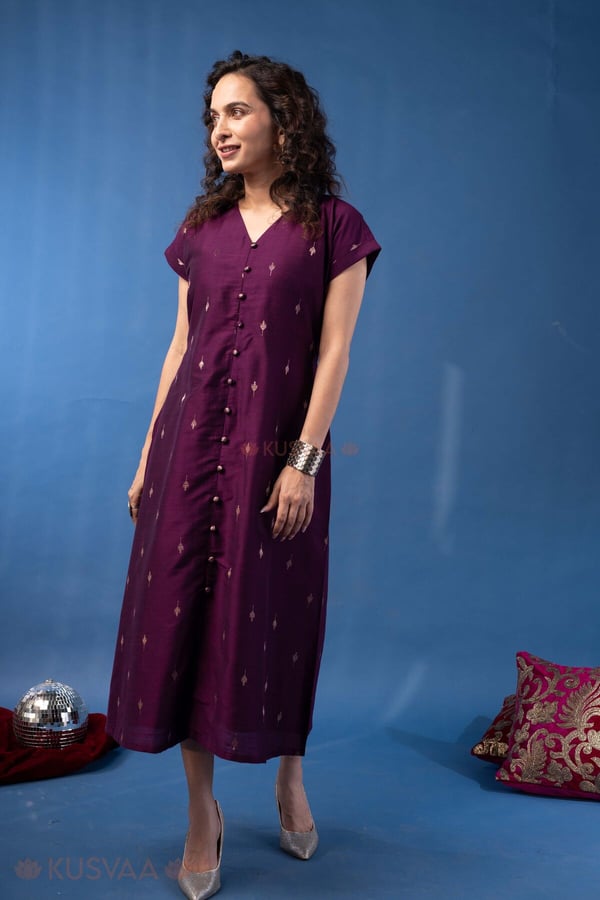
Many families follow a colour for each day of Navratri — the order changes each year with the weekday on which the festival begins, so check the list for this year. Whatever the colour, choose something you can sit, pray and dance in: light cotton or chanderi kurta sets, a dupatta for the puja, and a little mirror work or gota for the evening garba.
Explore the Navratri edit, and read about all nine nights in our Navratri guide.
Jai Mata Di.


