


On the first night of Navratri, devotees welcome Maa Shailaputri — “the daughter of the mountain”. She is Parvati in her first form, born to Himavan, king of the Himalayas, after her earlier life as Sati, who gave up her body in the fire of her father Daksha’s sacrifice. Reborn, she was again devoted to Shiva, and the first night honours that unbroken devotion.
How she is shown
Maa Shailaputri rides Nandi, the bull, and holds a trident (trishul) in her right hand and a lotus in her left. The crescent moon rests on her forehead. She stands for strength rooted in nature — the steadiness of the mountain and the purity of the lotus.
What the first night means
The first day is also the day of Ghatasthapana: a kalash (pot) filled with water, topped with mango leaves and a coconut, is set up and barley is sown in earth beside it, to sprout over the nine nights. Worship of Shailaputri begins the journey of Navratri — from the earthly to the spiritual — which is why she is linked with the root, the foundation on which everything else rests.
Offering and prayers
Pure desi ghee is traditionally offered to Maa Shailaputri, as a prayer for good health. Her mantra is “Om Devi Shailaputryai Namah”.
What to wear on the first night
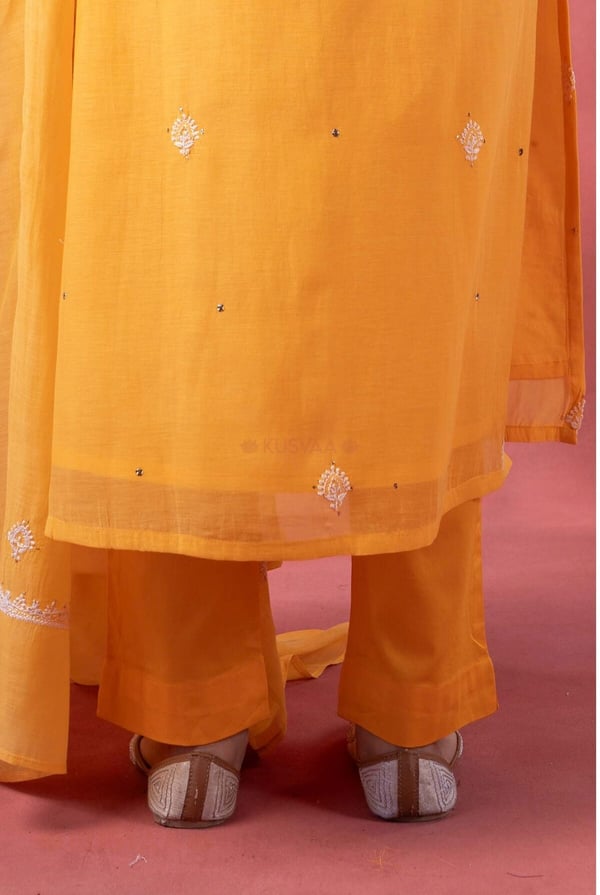
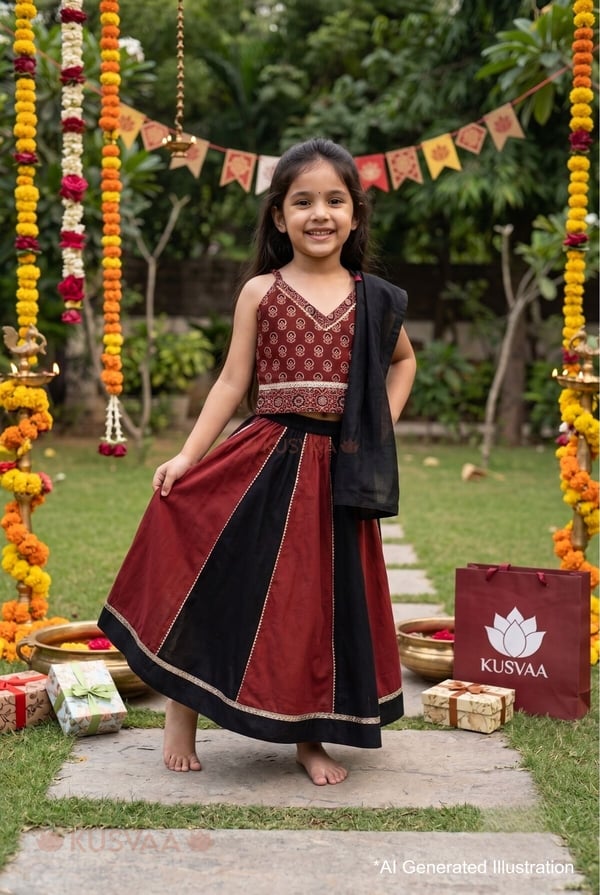
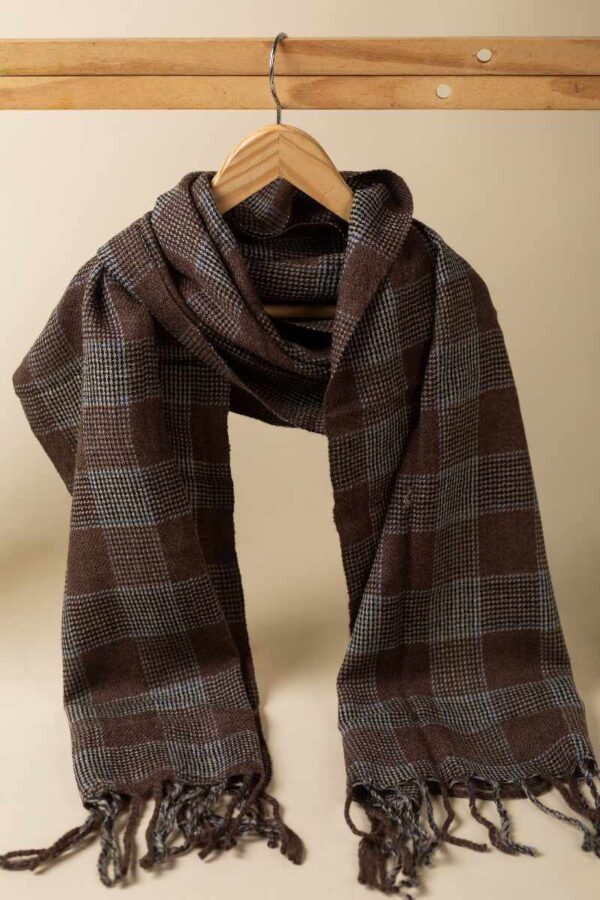
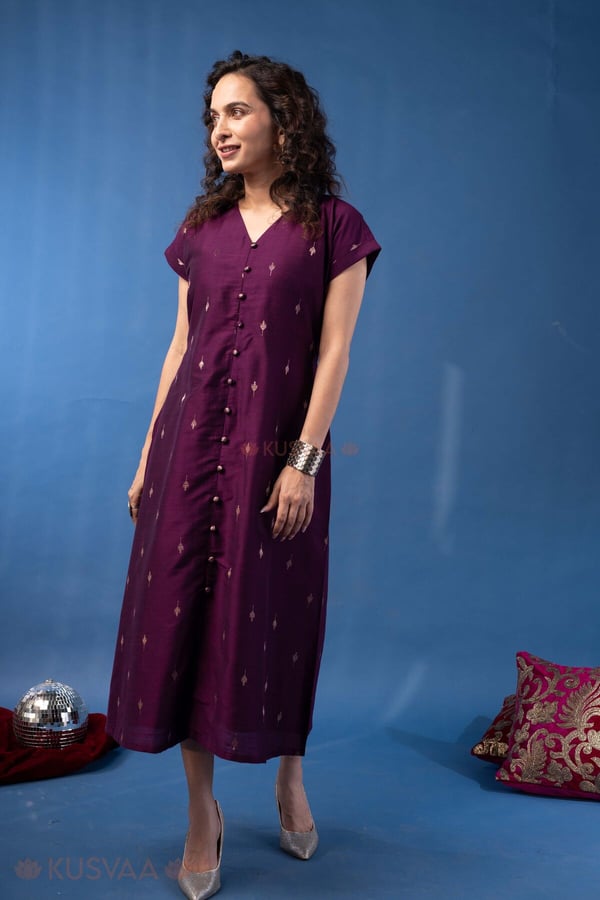
Many families follow a colour for each day of Navratri — the order changes each year with the weekday on which the festival begins, so check the list for this year. Whatever the colour, choose something you can sit, pray and dance in: light cotton or chanderi kurta sets, a dupatta for the puja, and a little mirror work or gota for the evening garba.
Explore the Navratri edit, and read about all nine nights in our Navratri guide.
Jai Mata Di.


