

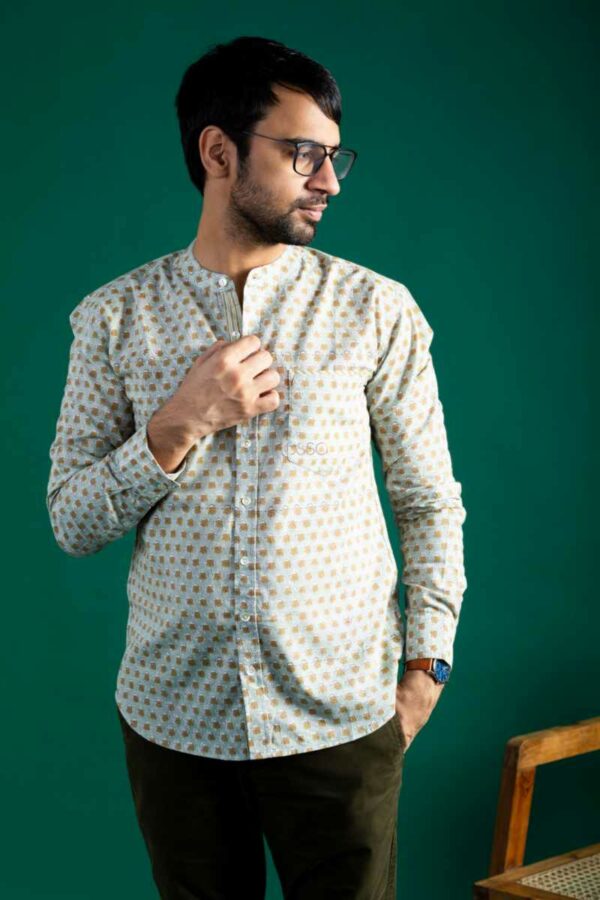

Most patterns are printed or embroidered onto finished cloth. In ikat, the pattern exists before the cloth does: the yarn itself is tied and dyed in sections, then woven so the colours line up into a design. It is one of the most painstaking textile techniques in the world.
How it is made
- The yarns are stretched on a frame and the design is marked on them.
- Sections are tightly wrapped to resist dye, and the yarns are dyed. This is repeated for each colour.
- The dyed yarns are set up on the loom in exact order and woven, the weaver adjusting each line so the pattern appears.
Because the dyed threads shift very slightly in the weaving, ikat motifs have a soft, feathered edge — the signature of the craft.
Single and double ikat
- Single ikat: only the warp (lengthwise) or only the weft (widthwise) yarns are dyed.
- Double ikat: both are dyed, and the pattern only appears where they meet perfectly. It is among the rarest weaves anywhere.
India’s ikat traditions
- Pochampally (Telangana): bold geometric designs; Pochampally ikat has a GI tag.
- Sambalpuri (Odisha): known as bandha, with motifs such as the conch, wheel and flower.
- Patola (Patan, Gujarat): the famous double ikat silk, once prized across Asia.
Read about Nuakhai, the festival where Sambalpuri ikat is worn with pride.
Coming up next
More from the Journal

Festivals of India
Navratri, Durga Puja & Dussehra: Nine Nights Across India and What to Wear
Next: 11 Oct

Festivals of India
Navratri Day 1: Maa Shailaputri, The Daughter of the Mountains

Festivals of India
Navratri Day 2: Maa Brahmacharini, The Goddess of Devotion and Penance

Festivals of India
Navratri Day 3: Maa Chandraghanta, The Goddess with the Moon-Bell